


How Long Do Eyelash Extensions Last: A Complete Guide
Eyelash extensions typically last 6–8 weeks, depending on the natural lash growth cycle and aftercare. Learn why lash extensions shed and how to improve retention.

A lash stickie happens when one lash accidentally becomes attached to a neighboring lash during an eyelash extension treatment. Poor isolation, too much adhesive, or glue that dries too slowly can all contribute to stickies.
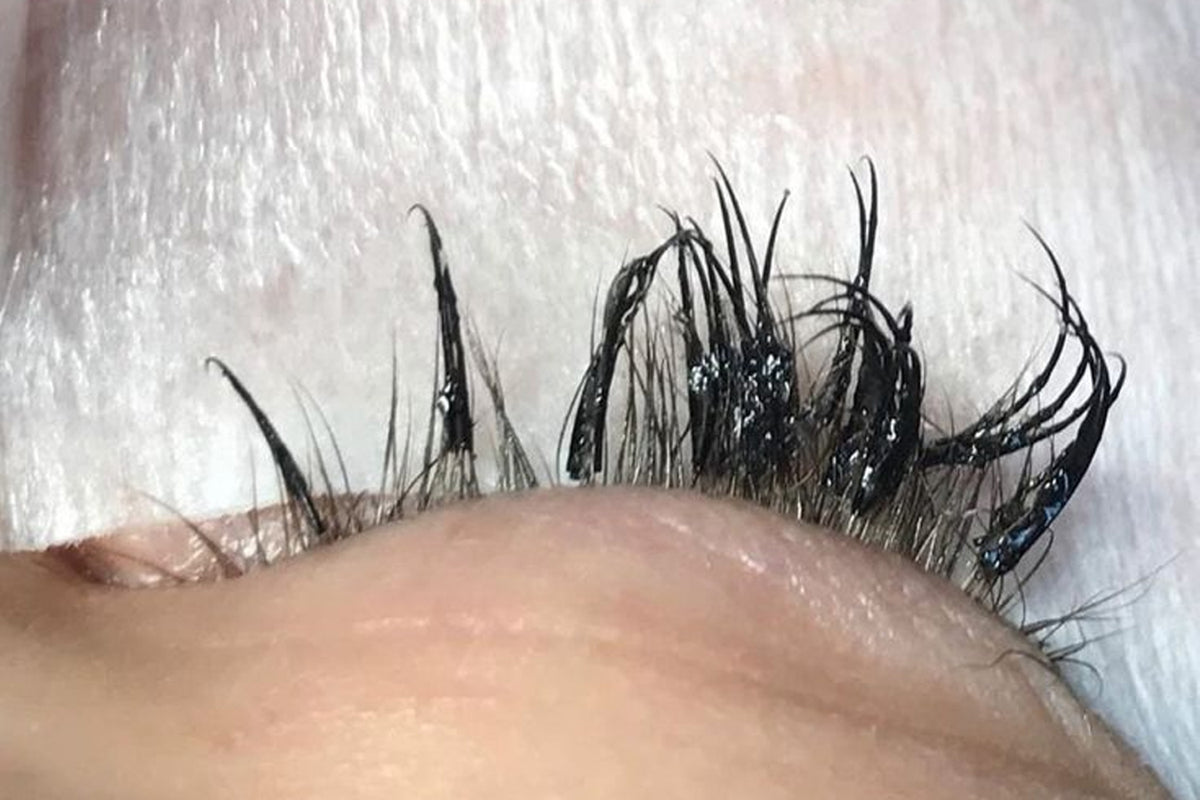
Stickies can cause discomfort and may encourage clients to rub or touch their lashes, which can affect retention. If lashes remain stuck together, they can also interfere with the natural lash growth cycle and potentially cause lash damage.
Baby Lash Sticking to an Extension
Baby lashes are short and can be difficult to isolate. If one becomes attached to an extension, it will continue to grow and may pull the extension to the side.
Always take extra care when isolating short, fine lashes.
One Extension Sticking to Another
This usually happens when too much adhesive is used or the adhesive takes too long to dry. Excess glue can also create a clumpy appearance and make future fills more difficult.
Bottom Lash Sticking to an Upper Lash
If the lower lashes are not properly secured with an under-eye pad or tape, they may pop out during the treatment and become attached to an upper lash extension.
Before asking the client to open her eyes, carefully check that no upper and lower lashes are stuck together.
1. Choose the Right Lash Glue
An adhesive that dries too slowly can increase the risk of stickies. Choose a lash extension glue with a drying speed that matches your application technique and working speed.
If you are using a slower-drying adhesive, keep your isolation tweezers in position for a few extra seconds to allow the bond to set properly.
2. Use the Right Amount of Glue
More glue does not mean better retention. Too much adhesive can slow drying and cause lashes to stick together.
Dip the extension into the middle of the glue dot and slowly slide it out. Aim for a thin coating covering about 2 mm from the base of the extension.
Avoid scooping or pulling the extension out too quickly, as these techniques can pick up too much adhesive.
3. Improve Your Isolation Technique
Good isolation is one of the most important ways to prevent stickies.
Work in layers: Separating the lashes by layers can make isolation easier and help you work more efficiently.
Use a guide lash technique: Instead of working continuously in one direction, use guide lashes to help maintain a clear working area and improve isolation.
4. Always Check Your Work
Leave a few minutes at the end of each treatment for a final stickie check.
Use your tweezers to gently check each lash from root to tip, separating any lashes that have become attached. Ask the client to blink and move her eyes in different directions to make sure there is no discomfort.
A thorough final check only takes a few minutes, but it can make a big difference to the comfort, retention, and safety of the finished set.
When it comes to lash extensions, client safety should always come first.


Customer service
info@veyelashfactory.comFollow us
Eyelash extensions typically last 6–8 weeks, depending on the natural lash growth cycle and aftercare. Learn why lash extensions shed and how to improve retention.

Learn the basics of creating neat, balanced volume lash fans, including fan types, popular techniques, and simple practice methods.

Learn the key differences between L & M curls and how to choose and mix them for different eye shapes.